
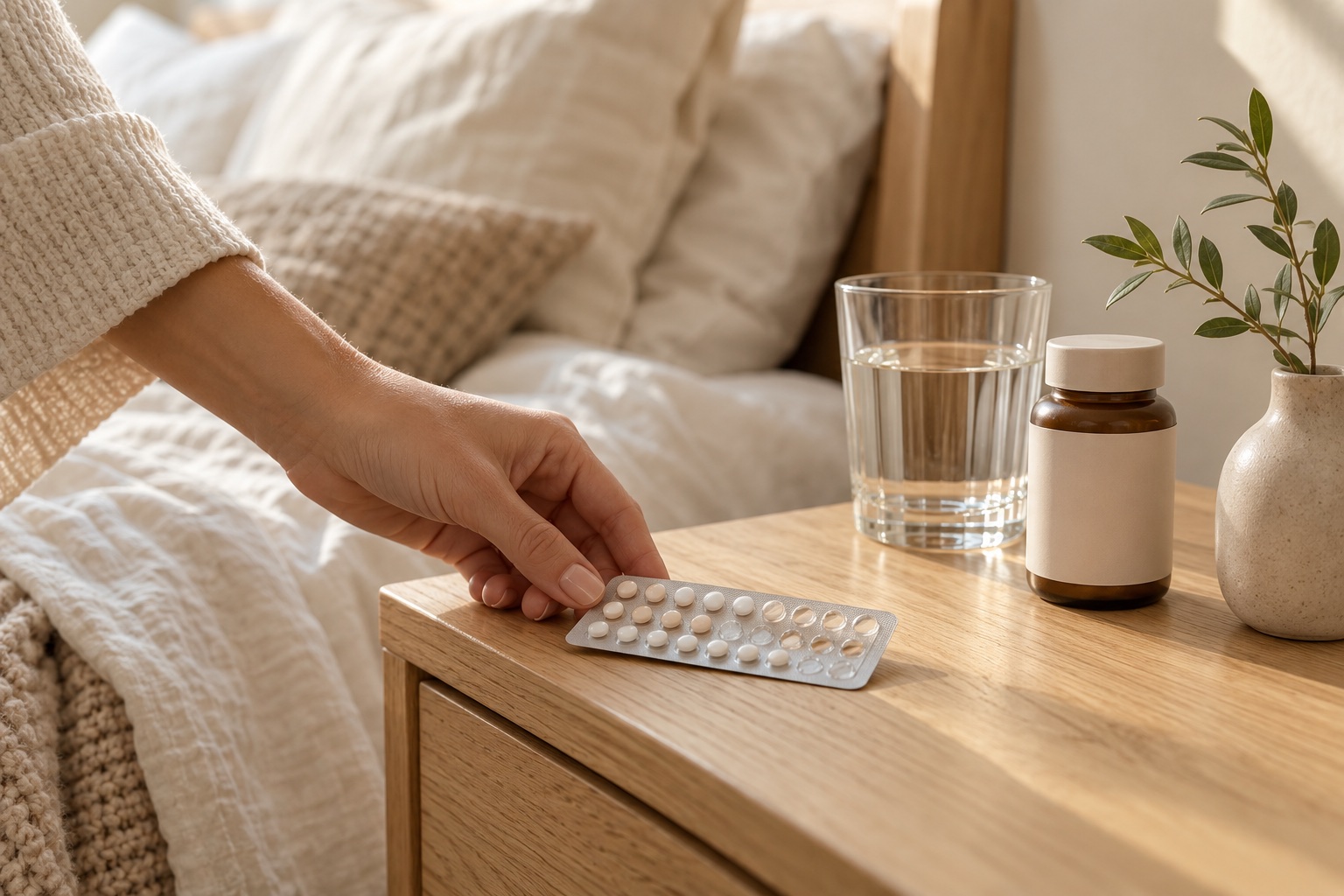
More than just stopping a pill
For a lot of women, deciding to come off birth control is the first real step toward getting pregnant. It feels simple. You stop taking it and your body picks up where it left off. Sometimes that is exactly what happens. Often, though, there is a transition period that nobody warned you about.
In my eleven years working in women’s health, this is one of the most common conversations I have. Women come to me two, four, or six months after stopping the pill, confused because their cycle has not come back, their skin is breaking out like it did in high school, or their periods are suddenly heavy and painful.
I want you to go into this transition knowing what is normal, what is not, and how to set your body up well. Because the months right after birth control are also the months your body is preparing the eggs you will try to conceive with.
What birth control was actually doing
To understand what happens when you stop, it helps to understand what hormonal birth control was doing in the first place.
Your natural cycle is a conversation between your brain and your ovaries. Your hypothalamus and pituitary gland, the hormone control centers in your brain, send signals called FSH and LH.
Those signals tell your ovaries to grow a follicle, release an egg, and then produce progesterone afterward. Think of it like a call and response that repeats every month.
Most hormonal birth control works by quieting that conversation. The synthetic hormones in the pill, patch, ring, shot, and implant tell your brain that hormone levels are already high, so it stops sending the strong signals that trigger ovulation.
No ovulation means no egg, and no pregnancy. The hormonal IUD works a little differently. It acts mostly locally in the uterus, and many women still ovulate on it.
When you stop, your brain has to restart that conversation on its own. For some women it picks right back up. For others, it takes a few months to find its rhythm again.
How long until your cycle comes back?
Most women ovulate again within a few months of stopping. How quickly depends a lot on the method you were using.
| Method | How it works | Typical return of ovulation |
|---|---|---|
| Combined pill, patch, or ring | Estrogen and progestin suppress ovulation | Often within weeks; most women within 1 to 3 months |
| Progestin-only pill (mini pill) | Thickens cervical mucus; suppresses ovulation in some women | Usually within weeks |
| Hormonal IUD | Acts mostly in the uterus; many women still ovulate | Usually within about a month of removal |
| Implant | Progestin suppresses ovulation | Usually within a few weeks of removal |
| Depo-Provera shot | High-dose progestin suppresses ovulation | The slowest to return; often 9 to 10 months from the last shot, sometimes longer |
These are typical timelines, not guarantees. Your own return also depends on what your cycle looked like before you started birth control. If your periods were irregular at 16 and you went on the pill to ‘regulate’ them, the pill did not fix the underlying cause. It covered it.
Whatever was going on then, whether it was PCOS, a thyroid issue, low body weight, or something else, may still be there when you stop.
What you might notice in the first few months
You may hear the term ‘post-birth control syndrome.’ It is not an official medical diagnosis, but it describes something real that I see in practice: a cluster of symptoms that shows up as your body adjusts to running on its own hormones again. Not everyone experiences it, and for most women it is temporary.
- Irregular or missing cycles. Your first few cycles may be longer, shorter, or unpredictable while your brain and ovaries get back in sync. This is common in the first one to three months.
- Acne. This is one of the biggest complaints, especially if you started the pill for your skin.
- Hair shedding. Some women notice extra hair loss a few months after stopping. This is often a temporary shift in the hair growth cycle as hormones change.
- Mood changes. Your natural rise and fall of estrogen and progesterone affects brain chemistry. Some women feel better off birth control. Others notice more PMS, anxiety, or mood swings at first.
- Heavier or more painful periods. Birth control thins the uterine lining, so periods on it are often light. Your natural periods may be heavier. Significant pain, though, is not something to just push through.
- Symptoms that were there all along. Endometriosis, PCOS, fibroids, and heavy bleeding can all be masked by birth control. Coming off can be the first time in years you see what your body is actually doing.
These symptoms are information. They are your body telling us what it needs, and they often point straight to what we should address before you conceive.
What birth control may have used up
This is the part of the conversation that almost never happens in a standard office visit, and it matters a lot for fertility.
Nutrient depletion
Oral contraceptives have been linked in research to lower levels of several key nutrients. In simple terms, your body uses up or loses more of certain vitamins and minerals while processing synthetic hormones. The ones that come up most often include:
- Folate, which is essential for preventing neural tube defects in the earliest weeks of pregnancy
- B vitamins (B2, B6, and B12), which support energy, mood, progesterone, and methylation, the process your body uses to build DNA and switch genes on and off
- Magnesium, which helps with blood sugar, sleep, stress, and cramping
- Zinc and selenium, which support egg quality and thyroid function
- Vitamins C and E, antioxidants that help protect developing eggs
The pill also tends to raise copper levels while lowering zinc, and that imbalance can affect mood, skin, and immune function. If you were on birth control for years, it is worth considering whether you may be starting from behind. Better yet, test to know for sure.
SHBG: the hormone sponge
SHBG stands for sex hormone binding globulin. Think of it as a sponge in your bloodstream that soaks up hormones like testosterone and estrogen, so they are not available for your cells to use. Estrogen-containing birth control raises SHBG significantly, which is one reason the pill can lower libido and clear up acne.
When you stop, SHBG does not always drop right away. In some women it stays elevated for months. That can mean lower available hormones while your body recalibrates, which is one more reason to give yourself time and to look at your labs rather than guess.
Your gut
Research is still developing here, but hormonal birth control has been associated with changes in the gut microbiome. Your gut is where you absorb those nutrients and where some of your estrogen is processed, so it is part of the picture too.
Should you wait before trying?
Medically, there is no requirement to wait. You can get pregnant in the very first cycle after stopping. Some providers used to recommend waiting for one natural period simply so it was easier to date the pregnancy, and that is still a reasonable option.
Use a non-hormonal method such as condoms during that preparation window if you are not ready to conceive. One thing I recommend for everyone, no matter the timeline, is to start a quality prenatal with methylated folate as soon as you decide to come off birth control, ideally at least a month before conception.
How to support your body through the transition
These are the foundations I focus on with women coming off birth control:
- Track your cycle. Use an app, basal body temperature, or a device like Mira that measures your actual hormones at home. Tracking shows whether and when you are ovulating, not just whether you are bleeding.
- Get your labs done. A comprehensive blood panel with a full thyroid panel, a micronutrient test, and a stool test gives us a clearer picture of where you are starting.
- Replenish nutrients. Focus on whole foods rich in folate, B vitamins, zinc, and magnesium, such as leafy greens, eggs, pasture-raised meats, pumpkin seeds, and legumes. Add a targeted supplement plan based on your results.
- Balance blood sugar. Pair protein, fat, and fiber at every meal. Steady blood sugar supports steady ovulation and is an important lever, especially for acne and PCOS.
- Support your gut and liver. Fiber, fermented foods, and plenty of water help your body clear used hormones and absorb what you eat.
- Protect your sleep and stress. Chronic stress, under-eating, and over-exercising can all interfere with the signals your brain needs to prioritize ovulation.
Most women have a body that needs a little more information and a little more support after years of having its natural rhythm quieted.
That is why we built the 12-Week Fertility Program at Nuvitru. It is designed for exactly this season: comprehensive labs, Mira hormone tracking, a personalized compounded fertility supplement, and a clinical team that helps your body find its rhythm and prepare for a healthy pregnancy. We offer it in person at our clinic in Lakeway and virtually for women anywhere in the country.